

Waldheim and S-21
DK-memosis members may be interested in a document I recently found in the United Nations archives. It goes to the question of when the UN Secretary General first had report of S-21 (and the wider situation of need in Cambodia after 7 January 1979). It also picks up some threads of the account of the UNICEF/ ICRC Joint Mission given by Stéphanie Benzaquen-Gautier in her 2016 doctoral thesis, thanks Stéphanie!
I went looking in the UN archive because of a comment I came across in the Tuol Sleng Museum’s historical visitor books: that of Victor Umbricht. Umbricht visited the S-21 site on 17 July 1979, writing a comment in the visitor book (at P166) and giving his affiliation as ‘United Nations’. Umbricht was a Swiss diplomat who was then the Coordinator for International Assistance to Vietnam. But he was in Cambodia on a ‘personal visit’ – the UN could not officially visit the PRK because it was not diplomatically recognised. Umbricht was – entirely coincidentally, he later claimed – travelling with two others, Jacques Beaumont and François Bugnion, of UNICEF and the ICRC respectively. These men were on official business given their agencies’ mandates (see Benzaquen-Gautier, 2016, 110 and 120-121). Victor Umbricht subsequently wrote an (unofficial) nine-page report dated 31 July 1979 (which included a paragraph on ‘Prisons’ and a description of S-21 at p.7), and a two-page summary of this report on 8 August 1979. Umbricht’s report was forwarded to UN Secretary General Kurt Waldheim on 9 August. Along with Umbricht’s report and summary came a clipped front-page New York Times article also from 8 August which quoted ‘anonymous’ UNICEF and ICRC officials (Beaumont and Bugnion) on the situation inside Cambodia. They reported seeing evidence of torture in the archives at S-21/TSGM.
Umbricht’s file also contains a note reporting that the Chinese Ambassador contacted Umbricht on 15 August 1979 in Berne. The note reports that the Ambassador:
‘was very interested in discussing with Mr. Umbricht possibilities of a solution to the situation in Kampuchea. The Ambassador indicated that, in view of Pol Pot’s unpopularity, his Government would not be able to support him in the long run. The Ambassador wondered if Mr. Umbricht could talk to the Vietnamese Government about this matter and he also invited him to visit Peking. He made it clear that he was approaching Mr. Umbricht in his UN capacity. (The Ambassador indicated that his Government realised that Mr. Umbricht’s visit to Kampuchea had been in a personal capacity and that the Government appreciated this distinction.)’ (see UN doc. S-0990-0006-04-00001, accessed 14 May 2019).
It appears that the Secretary General gave the task of contacting the Chinese Mission ‘in order to explore the matter in a discreet way‘ to his Under-Secretary General and Chef de Cabinet, Rafeeuddin Ahmed. I’ve not chased this story further, but it surprised me to find such explicit efforts underway so early on. In a forthcoming paper, which pivots on an earlier visitor book comment, I examine a campaign led by progressive jurists and the AFSC (the Quakers) for the recognition and UNGA seating of the PRK, and for investigation of KR crimes. This gem from Umbricht’s file also makes me wonder whether the high-level diplomatic scene was considerably more fluid in 1979 than it subsequently became during the ‘stalemate’ of the 1980s, characterised in part by China’s ‘long run’ support! Any thoughts welcome…
Also of interest may be a ‘Preliminary note on the Economy of Cambodia’ at pp. 238-249 of the same UN doc. It states that it is: ‘based solely on information at hand, and covering the period from 17 April 1975 through December 1978, ending with the events of January 1979′ and that:
‘A preliminary evaluation of Cambodia’s total assistance requirements for rehabilitation and reconstruction, including capital expenditures, commodity aid, budgetary support and humanitarian assistance suggests that they would range from $160 million to $180 million in 1979 and 1980.’
The millions that never came.
Rachel Hughes
Posted in Uncategorized
Leave a comment
Marina Kem’s ‘Bonne Nuit Papa’ on Arte
From 3 to 9 February 2019, Marina Kem’s movie ‘Bonne Nuit Papa’ (2014) will be available on Arte Mediathek.
Marina Kem’s father, Dr. Ottara Kem came to study in the GDR in 1965 and stayed there. He never spoke about Cambodia with his daughters, but on his deathbed he said he would like to be buried in his homeland. The movie describes Marina Kem’s journey in Cambodia, as she retraces the story of her father and delves into the country’s past.
The teaser (in German) can be found here.

PTSD in Cambodia (Devon Hinton and Eric Bui)
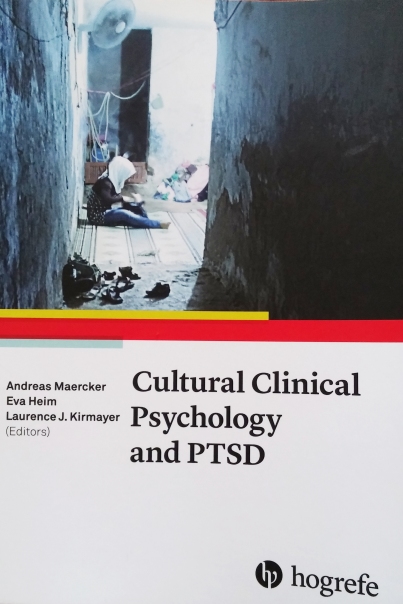
A new paper by psychiatrists/psychologists Devon Hinton and Eric Bui on questions of (post-Khmer Rouge) PTSD in the Cambodian population was recently published in the book Cultural Clinical Psychology and PTSD, edited by Andreas Maercker, Eva Heim and Laurence J. Kirmayer (Hogrefe, 2018). In ‘Variability of PTSD and trauma-related disorders across cultures: a study of Cambodians’, Hinton and Bui discuss the interaction of somatic symptoms, cultural interpretations, spiritual schemas and catastrophic cognitions (negative world schemas) among Cambodians who have experienced the Democratic Kampuchea period. This is not an easy text, and the layman will certainly be a bit lost with the terminology and references. Yet, it is an important and stimulating chapter, that helps think further about the long-term effects of Khmer Rouge violence on everyday life, intimacy and self-perception, the materiality or physicality of trauma (happening to the body and through the body), the relation of ethnophysiology and psychological anthropology, as well as the complexity of the techniques that may be developed in response to widespread PTSD in Cambodia.
Posted in Uncategorized
Tagged Andreas Maercker, Devon Hinton, Eric Bui, PTSD, Publications, Trauma
Leave a comment
Norng Chan Phal’s memoirs
“At around 1 am at night, Vietnamese and Cambodian soldiers belonging to the Vietnamese volunteer army and the National United Salvation Armed Forces of Kampuchea entered the prison compound with guns and flashlights. They found the children sleeping in the clothes. They were Phal’s ultimate saviors. The soldiers picked up the children from the clothes. One of them took two army bottles of water from his waist and fed them. Because the children’s clothes were partly torn as well as smelly due to lack of shower and prolonged sleeping in dirty prison clothes, the soldiers undressed them. They also found extra water to show them that night.”

This is an excerpt from the latest addition to testimonial literature on S.21, the memoirs of Norng Chan Phal, The Mystery of the Boy at S.21: A Story of Family, Love, and the Struggle to Rebuild Life after the Khmer Rouge Genocide, published by the Cambodian Institute for Peace and Development and released in spring 2018. Dr. Kok-Thay Eng, director of the CIPD, worked with Chan Phal over a year for this project. The two had met some ten years ago, after Kok-Thay Eng made a research trip in Vietnam for the Documentation Center of Cambodia and saw the Vietnamese footage of S.21 (see article here). The child survivors Norng Chan Phal (9 at the time), his younger brother Norng Chan Ly (6), as well as two other children, Socheat (2) and a six-month old baby the Vietnamese named ‘Bram Pi Makara’ (7 January) appeared in the Vietnamese film. Some images feature in John Pilger’s Year Zero as well.
The Mystery of the Boy at S.21 is divided in several parts, which all include background information about the Khmer Rouge regime. The first part describes Chan Phal’s childhood in the Damnak Snoul village, in the Kandal province, which came under Khmer Rouge control in 1970 and was collectivized. The second part starts with the evacuation of the family to the village of Tray Trayeng in Kampong Speu province after April 1975. There, his father Norng Chen became sawmill chief. Chan Phal was put in a child unit and learned how to survive in this cruel environment, even managing to visit his mother Mom Yov. Norng Chen was arrested in September 1978. In December, it was the turn of Mom Yov, taken to Phnom Penh with her sons Chan Phal and Chan Ly. After four days spent at the train station with other prisoners, they were brought to S.21. The children witnessed their mother being beaten, and after one night spent with her in a cell, they were separated. Chan Phal and his brother were left in the kitchen, to the care of the cook. After a couple of days, they realized that S.21 was being evacuated. Hoping that their parents would manage to find them, the boys hid in the pile of prisoner clothes and waited. In the book, Chan Phal recounts the terrifying scene when after a while he searched the empty prisons and found the prisoners who had just been killed on bed frames. The last part of the book, which is equally fascinating, recounts the years after these events. He and his brother were adopted by the Minister of Propaganda Keo Chanda, and lived with his family for three years. On the advise of Minister Hun Sen, they were placed at the Kolap Two Orphanage in Phnom Penh. There was also a brief stay at the Hungarian Friendship Orphanage in Kandal province, followed by their return to Phnom Penh. Chan Phal describes the heavy psychological toll taken by his experience and the loss of his parents in S.21, and his struggle to build his life. There are some very emotional moments, such as his reunion with his older brother Norng Chan Than in 1986, and his friendship with another S.21 survivor, Rui Kong.
Norng Chan Phal’s memoirs is an extremely important document. His testimony provides precious insights into the functioning of S.21, for instance the treatment of women and their children, as well as many new elements about the aftermath of the Pol Pot regime and individual and collective reconstruction in the first years of the People’s Republic of Kampuchea. Beyond that, it is also the tribute of a son to his parents, who disappeared in tragic conditions.

Norng Chan Phal and his wife, at his stall in Tuol Sleng. Photo by Anne-Laure Porée, May 2018.
Posted in Uncategorized
Tagged Book review, Child survivor, Memoirs, Norng Chan Phal, Publications, S-21
Leave a comment
The ‘Killing Caves’ (1)
Those past weeks I’ve been doing some research on the photographic depiction of Khmer Rouge-related memorials that are not located in Phnom Penh and its region, and I’ve been struck by how little was published (offline, online) about the ‘Killing Caves’ of Phnom Sampeau (Sampeou or Sam Pov), not far from Battambang City in the northwestern part of the country. Visitors are generally told that 10,000 victims were thrown off the cliff by the Khmer Rouge. All this remains a bit vague, and I thought it could be interesting, for those who want to know more about the place and its history, to bring some more information and progressively complete it.

Benzaquen/Van Tijen, November 2014
The Khmer Rouge used the Lakhoan cave (one of three, known as ‘killing caves’) to dispose of the bodies of the people who were imprisoned at the nearby Wat Kirirum (Kirirom) Security Center, a former pagoda. The latter has been, since then, rehabilitated and redecorated with scenes from the Ramayana, thanks to the donations of local people. The staircase leading to the cave was built in the 1980s, when the site was converted into memorial. The memorial itself was reshuffled and dedicated in 2007. As a reminder: Wat Kirirom Security Center is on the list of several crime sites to be investigated in Case 004 (Yim Tith). Forensic anthropologist Julie Fleischman made a study of the human remains at the Lakhoan cave (see her excellent doctoral work ‘Remains of Khmer Rouge violence: the materiality of bones as scientific evidence and affective agents of memory’, Michigan State University, 2017).
So, for the moment, it is not much. But, at least, I was lucky to discover a few days ago a very early account about the site, written by Françoise Corrèze, a French anthropologist who visited the ‘killing caves’ in December 1979 (Choses vues au Cambodge). I put here the translation in english, and below the original text in french. As well, thanks to Flickr, I could find a few photos of the site, taken over a period ranging from 2007 to 2017.
(To be continued, Stephanie Benzaquen)

Matthew Klein, July 2007 (CC)
Phnom Som Peu is located 14 kilometers away from Battambang. That morning we leave early. After a while, the elegant silhouette of the pagoda, whose name means the ‘junk’, comes into sight. We decide to climb up the hill. There is a staircase flanked by prickly bushes, fragrant shrubs, and tall grass. At each landing, there are ornaments in stone intertwined with lotus flowers… We keep climbing up on the hillside, in the midst of thorny plants. The heat is hard, there is barely any shadow. A first shelter, completely empty, after a sculpted arch… What will we find at the top?
Five thousand people were killed in the region. Up there lie the last ones, those who were massacred at the last moment.
We keep climbing up… The trip has so sinister a goal, alas, since we will find only mass graves. I feel extremely ill-at-ease and I can’t reconcile the walk itself and its aim. As we climb up, villages appear at the bottom of the hill, surrounded by trees, mango trees and jackfruit trees, overlooked by palm trees. The pagoda, like all the other pagodas [in the country], has been wrecked.
On a nearby height, the Phnom Kdong, the ‘junk’, with its terrasse, looks like a countryside house… It was a prison during the Khmer Rouge. Inside, there is nothing, except brown stains on the floor that could be traces of blood. We walk on black and white hair. On the walls, some drawings and some words in French:
-We were brought here on 6 February 1978 in some twenty trucks. They beat us, again and again. We did not understand anything.
Further, a sentence in Cambodian:
-Here dies the Khmer nation.
Indeed, part of the Khmer people died here.
As they could not dispose of the bodies of their victims, the executioners threw them off from the top, into the caves at the bottom of the temple. How many of these unfortunate people lie in the shadow? Fifty? A hundred? More perhaps…
In the first cave, smaller and less deep, there is a pile of burnt-out rags out of which one, two skulls and a burnt-out foot emerge. Above them, the wall is smooth and gray.
We go down to a second cave, via a metal staircase. It is huge, and opens on a deep chasm. In the blue shadow, there is a big reclining Buddha, who looks like he is waiting, impassible.
After a fall of several meters, the bodies slided on the slope. It is like a cascade of tibias, femurs, the hoop of a chest cavity, and smooth skulls amidst burnt-out remains.
At the bottom of the staircase, a skeleton, with its back to the banister, legs spread, arms open, waits for us. Prehistorical figure, monstruous symbol that seems about starting a dance of death.
On the side, another skeleton fell forward, in its ultimate race against death.
Frozen in front of such a spectacle, one can neither talk, nor protest, not even think. The horror is beyond any understanding.
Later on, we are told that the slaughtering took place after the liberation of Phnom Penh [by the Vietnamese in January 1979]. The victims are perhaps Khmer Rouge who opposed the crimes of the Pol Pot regime and were massacred by their former comrades.
At the bottom of the Phnom, a woman sits under a tamarind tree. She tells:
-We were forced to dig mass graves between the dikes for the bodies. The stories people told were so terrible that children did no longer dare to go through the fields.

Glenn Forbes, January 2011 (CC)

Amaury Laporte, January 2011 (CC)
Le Phnom Som Peu est à 14 kilomètres de Battambang. Nous y partons de bonne heure ce matin là. Bientôt se dessine sur la colline l’élégante silhouette de la pagode dont le nom désigne la ‘jonque’. Nous décidons de gravir la pente qui nous y conduira. Un escalier s’élève entre les buissons épineux, les arbustes odorants, et les hautes herbes. À chaque palier, des ornements de pierre où s’entremêlent des lotus… Nous continuons maintenant à flanc de montagne, au coeur d’une végétation épineuse. La chaleur est dure, l’ombre rare. Un premier refuge déserté après cet arc sculpté.
-Qu’allons nous trouver au sommet?
Il y a eu 5,000 morts dans la région. Là-haut reposent les derniers, ceux qui furent massacrés au dernier moment.
La montée continue avec ses replats, ses descentes, ses remontées sous la chaleur qui s’accroît. Excursion au but lugubre! hélas, puisqu’il s’agit de charniers. J’avoue éprouver un malaise singulier et n’arrive pas à concilier la promenade et son aboutissement. À mesure que nous nous élevons, les villages apparaissent à nos pieds dans leur îlot d’arbres: maisons gracieuses au milieu des manguiers et des jacquiers, que des cocotiers dominent de leur haute stature. La pagode, comme les autres, a été saccagée.
Sur une hauteur proche, le Phnom Kdong, ‘la voile’, ressemble, avec sa terrasse, à quelque maison de campagne… À l’intérieur de ce qui devint une prison, rien, sinon le sol où des taches brunes sont peut-être des traces de sang. On marche sur des cheveux noirs ou blancs. Au mur des graphies et de mots en français:
-Nous avons été amenés ici le 6 février 1978 dans une vingtaine de camions. Ils nous ont frappés, frappés, Nous ne comprenions rien.
Plus loin, cette phrase en cambodgien:
-Ici meurt la nation khmère.
Et c’est bien une partie du peuple khmer qui mourut ici.
Ne pouvant pas faire disparaître les corps de leurs victimes, les exécutants les ont précipités dans les grottes qui s’ouvrent au pied du temple. Combien y en a-t-il de ces malheureux entassés dans l’ombre? Une cinquantaine? Cent? Plus peut-être…
Dans la première grotte, plus petite et moins profonde, d’un amas de loques incendiées émergent un, deux crânes et ce pied calciné. Au-dessus la paroi est lisse et grise.
Ce ne sont pas les bourreaux qui ont brûlé les corps, mais les habitants de la région qui, dans un élan de piété, les ont incinérés selon la tradition.
On descend dans la seconde grotte, par un escalier de fer. Elle est immense, et s’ouvre sur un gouffre profond. Dans l’ombre bleue, un grand Bouddha couché semble attendre, impassible… Tout autour tombent des stalactites.
Précipités de plusieurs mètres, les corps ont glissé sur la pente. Une cascade de tibias, de fémurs, l’arceau d’une cage thoracique et des crânes lisses au milieu de restes calcinés.
Au pied de l’escalier, adossé à la rampe, un squelette, jambes écartées, bras ouverts, nous attend. Figuration préhistorique, symbole monstrueux d’une aura qui semble esquisser quelque danse macabre.
Un autre sur le côté, est tombé en avant dans son ultime course contre la mort.
Figé devant un tel spectacle, on ne peut ni parler, ni protester, ni même penser. L’horreur dépasse l’entendement.
On nous précisera par la suite que ce massacre a eu lieu après la libération de Phnom Penh. Peut-être les victimes sont-elles en partie des Khmers rouges opposés aux crimes du régime de Pol Pot et massacrés par leurs anciens camarades.
Au pied du Phnom, une femme est assise sous un tamarinier.
-Nous étions obligés, dit-elle, de creuser des fosses entre les digues où l’on jetait les cadavres. On racontait des histoires si terribles que les enfant n’osaient plus traverser les champs.
(pp. 115-118)

Bernhard Huber, November 2014 (CC)
Posted in Uncategorized
Tagged Battambang, Firsthand account, Françoise Corrèze, Killing Caves, Lakhoan Cave, Memorial, Phnom Sampeau, Wat Kirirom
Leave a comment
Tuol Sleng February 1980
Here is the paper written by British writer and journalist Anthony Barnett (at the time a member of the Transnational Institute of Policy Studies and later on founder of Open Democracy) after his trip in the People’s Republic of Kampuchea in February 1980. It is available in Aftermath: The Struggle of Vietnam and Cambodia (1982), a collection of essays he and journalist John Pilger had published in the Daily Mirror and the New Statesman between 1979 and 1981.


Posted in Uncategorized
Tagged Aftermath, Anthony Barnett, John Pilger, Publication, Tuol Sleng
Leave a comment
Recent publication by Eve Zucker
Anthropologist Eve Zucker made available online (via Academia.edu) the book chapter “Contested Narratives of Victimhood: The Tales of Two Former Khmer Rouge Soldiers.”
The chapter is based on the research Eve Zucker conducted in two communes in Southwest Cambodia in 2002-2003 and 2010. She discusses the testimonies of two former Khmer Rouge: ‘Phat’ (who joined the Khmer Rouge as a teenager in 1973 and stayed with them into the 1980s) and ‘Hom’ (a monk who joined the Khmer Rouge in 1970). She captures the ‘in flux’ dimension of personal narratives and their complex relation to official narratives such as the ECCC’s as well as the ways in which these accounts reflect their authors’ attempt to articulate the past and present-day realities by reframing their individual experience and collective identity. She emphasizes the contested dimension of the process of building a biography of Khmer Rouge, especially in the gray zone that lies between the categories of victim and perpetrator.
Posted in Uncategorized
Tagged Anthropology, Eve Zucker, Perpetrator testimony, Publication, Southwest Cambodia
Leave a comment
CfP: “The Missing Picture” : Rethinking Genocide Studies and Prevention Biennial Meeting of the International Association of Genocide Studies July 14-18, 2019 Phnom Penh, Cambodia
“The Missing Picture” (1) :
Rethinking Genocide Studies and Prevention Biennial Meeting of the International Association of Genocide Studies July 14-18, 2019 Phnom Penh, Cambodia
Sponsored by the Center for Southeast Studies, American University of Phnom Penh and the Center for the Study of Genocide and Human Rights, Rutgers University, New Jersey
The field of genocide studies is flourishing. It is the focus of academic programs, a multitude of conferences and workshops, international diplomacy, research centers, public policy, and a rapidly growing and increasingly sophisticated body of scholarship, including field-specific book series, journals, readers, and textbooks. However, this remarkable growth has not been without its problems. Like all scholarly domains, genocide studies has been formed from particular disciplinary perspectives and traditions, resulting in a disproportionate focus on a small canon of cases as well as a predominance of literature marked by Western perspectives. Proposals are invited for papers broadly related to the theme of “Rethinking Genocide Studies and Prevention.”
Taking place in Phnom Penh, Cambodia, the 2019 IAGS conference marks the association’s 25th anniversary and will be its first conference in Asia, extending efforts to diversify prevailing understandings of the experience of genocide, and the steps we can take to recover and learn from it. Although proposals concerned with any aspect of genocide are welcome, we especially encourage submissions on the following topics:
• New Directions in Genocide Studies and Prevention
• The Cambodian Genocide
• Genocide Education
• Genocide, Atrocity Crimes, and Human Rights
• Critical Genocide Studies
• Genocide, Aesthetics, and the Arts
• Sexualized Violence
• Memory and Transitional Justice
• Indigenous Perspectives • Cultural Genocide and Heritage Practices
• Resistance and Responses to Genocide and Mass Atrocity
We welcome proposals for sessions and papers making use of alternative delivery formats, and most especially presentations that seek to break new ground on the widest possible variety of cases, concepts, theories, methods, practices, traditions, and topics relevant to the study of genocide, genocide education, and prevention. In addition to established scholars, submissions are being sought from emerging scholars as well as those working specifically in /on genocide in Southeast Asia. Presentations on under-researched genocides, comparative analyses, and critical and creative work intending to challenge or revise current conceptions of genocide and genocide studies are likewise particularly encouraged.
In addition to individual presentations, we are interested in receiving proposals for thematic panels normally comprised of no more than three people. Proposals for artistic or other kinds of installations, readings, public performances, screenings, workshops, and pop-up events will also be considered. Those thinking along these lines are strongly encouraged to contact the conference organizers prior to submitting their proposals in order to obtain more information concerning what might be possible. No IAGS funding is available to support such initiatives and events, however deserving. IAGS remains committed to (geographical, gender, racial, sexual, etc.) diversity, and so organizers are strongly advised to ensure that any proposed panels are as inclusive as possible since diversity will be a selection criterion.
The 2019 IAGS conference will take place on the 40th anniversary of the fall of the Khmer Rouge in a locality that continues to grapple with atrocity crimes and their legacies. It is also scheduled to occur during the final years of the Extraordinary Chambers in the Courts of Cambodia (ECCC). Participants will therefore be exposed to a vibrant public culture that is contributing not just to academic work, but to related efforts at memorialization, education, prevention, peacebuilding, and transitional justice.
There will be a number of site-specific opportunities available to those attending the conference, including excursions to former prison sites, Khmer Rouge zones, and the ECCC, as well as a number of primary archives and research facilities, judicial reparation initiatives, and arts performances. More details will be available closer to the conference dates.
Submission Details:
Proposals should be no more than 250 words long, and must include the presenter’s full name, affiliation, a brief biography (150 words), and an e-mail contact address. Text should be singlespaced and written in 12-point Times New Roman font. Panel proposals must include the relevant information for all participants.
To facilitate review, all proposals should be saved and submitted as Word files. Regardless of format, all conference presenters should plan to speak for a maximum of 20 minutes. Although multiple submissions are permitted, the organizers reserve the right to accept only one proposal.
Proposals must be submitted online at: https://iags2019.com.
Questions may be addressed to the conference organizers at: info@iags2019.com.
All submissions must be received no later than midnight (EST), November 30, 2018.
(1) We acknowledge taking inspiration for this title from Rithy Panh’s film The Missing Picture (Strand Releasing, 2014).
Posted in Uncategorized
Tagged Call for Proposal, Conference, Genocide, INoGS 2019, Phnom Penh
Leave a comment
Displaying new reprints at Tuol Sleng Genocide Museum obtains new information and further questions
Written by: Barbara Thimm (GIZ Advisor TSGM) & Chhay Visoth (Director of TSGM) in September 2017.
Research Team: Suon Phirun (Head of Archive TSGM), Hul Channaroth (Team Archive TSGM), Song Pheaktra (Team GIZ and Historian TSGM)
June 2017: During the closing statements of case 002/02 at ECCC, S-21 was mentioned and questioned again. Chhang Youk, director of DC-CAM, send on June 22 to his newsgroup an email with the title “Photos from Khmer Rouge secret prison S-21. January 10, 1979” including ten photos taken in January 1979 at the former prison site S-21 (Building A) and the information, that DC-CAM had interviewed the Vietnamese photographer and filmmaker Ho Van Tay in 2009, who had reached the site as one of the first.
TSGM asked DC-CAM if they would provide the museum with the negatives of these photos, as the photos displayed in the ground and first floor in building A were (and are) in a very bad shape, and – as for our knowledge – had never been replaced since putting them up in 1979 or little later.
DC-CAM informed the museum, that they do not have the negatives of these photos (they believe that they are in Hanoi[1]), but they offered the museum to reprint ten photos in the size of A0 (about 120cm x 85cm). The museum decided to frame the reprints and protect them with glass. Two of the photos show the same situation only from a slightly different angle, so it was decided to put up 8 out of 10 of the reprinted photos. We did not want to show two photos of the same situation in the same room. (As DC-CAM does not have the negatives, they could not provide us with the information, if the photos are printed from the correct side and were not unwillingly turned upside down.)
Displaying the photos in building A, the team took the chance to search for the same room, were the photo was taken on 1979, January 10th. It looks like that this had never been done before. The result is: from eight photos, we found
- of three photos the exact room including the exact bed, now in the same position as in January 1979 (see photos below). ROOM N°3 (first upper floor)
NOTE: The three floor tiles at the wall on the left side of the bed are clearly visible on the photo. In addition in the right corner of the room, you can see paint on the floor tiles at the wall.

 ROOM N°5 (ground floor)
NOTE: This pattern of the window grilles only exist in this room. The same grilles are clearly visible on the photo on the wall.
- of one photo we know, that the situation was either in the room where the photo is displayed now (room n°1), or in the neighboring room with the same pattern of grilles in front of the window. Only these two rooms carry this certain style of window grilles (ground floor, room n°1 and n°2).
ROOM N°1 (first upper floor)
NOTE: The floor tiles at the wall under the windows are clearly visible on the photo.


- the photo now placed in room n°2, was obviously taken in the ground floor, but we can’t discover the window grilles precise enough. This room was chosen, because the bed on the photo had remained in this room and the size of the windows would fit.
- another one photo we could at least place it in the upper floor, as it was obviously taken in one of the big rooms (with two windows), which only exist in the upper floor. We did NOT find the exact room, as the floor tiles are obviously different. (See photo below).
ROOM N°5 (first upper floor)
In this case we do NOT know the exact room, as the floor tiles are showing a different order on the photo. The visitor is informed on the short description besides the photo. But at least it is now displayed in the first floor and not any longer in the ground floor.
- additional two photos: the detail of the room shown on the photo is too small, to make it possible to find the exact room. We put them up, giving notice to the visitors, that we can´t be sure, in which room this situation happened. It is only most likely, that these photos were taken on the same day in the same building as they belong to the same series of photos (as far as we know, but can´t prove, as we can´t check with the negatives).
It was possible to relocate the photos mainly out of three reasons:
- When the prison (especially building A) was changed in October 1978[2] and the rooms in the ground floor were turned into single detention rooms – in the size of half of the former classrooms – the windows including the window grilles must have been replaced. Now you find in the ten rooms, six different types of window grilles. For example in room n°5, you would only have in this one room, this certain type of window grilles, which made it easy to link the photo with the room.
- Having a closer look at the rooms, you find quite a number of floor tiles (at the wall!) replaced. We do not know why they have been replaced. As you find these already on the photo from January 1979, we know now, that these replacements have happened before 1979 and most likely as part of the rearranging the rooms in October 1978. The different pattern of the row of floor tiles at the wall, made it in two out of three cases possible, to know now the exact position where the photo was taken.
- Until today, 18 beds remained at the museum, where we believe/ know that they were used during the time of the prison. Out of 18 beds, 16 beds have an individual look. Out of the 18 beds, four beds show a symbolic “sun above water” motive. Every single bed must have been produced by hand, as all of them are different. This helped to link the situation with the bed and the room.
Additional photos could give us the chance to display more photos in the correct room and to gain more information on details in the rooms!
Replacing the old photos not only gave us the opportunity to search for the original room and perspective, were the photo was taken. At the same time we took the chance to cover in most of the cases the faces of the dead persons (and to inform the visitor, that we do not know the names of the dead persons shown on the photos). This was the only way, we felt, that we could show, that we care about the dignity of the victims, but at the same time to address the need to display these photos, as they are an important prove of the crimes happened at S-21.

Further learning out of this research:
- The floor tiles in the first (upper) floor in building A (not in the ground floor[3]) were never replaced since 1979. Including the tiles in different color and pattern, which obviously not belong to the first group of floor tiles.
- As the photos from the first floor, show wall paint on the floor tiles at the wall AND on the closed holes of the former timber heads of the single cell structure, this gives us the information, that a) the walls were never been repainted after January 1979 and b) the walls were painted after removing the singles cells, so most likely in October 1978.
- As we now know, that the renewed floor tiles in building A (first floor) were replaced before(!) 1979, we can believe that the walls in building B, second floor, were taken out during the prison time – as the tiles, which were used to close the gap (of the former walls) have the same pattern as in building A. This opens (again) the question: Why were the walls removed during the time of the prison in the entire upper floor of building B? For what use? (On the floor you find traces of former single cells, like in the first floor of the same building.) (See photos below).
NOTE: The pattern of the tiles which were used in building A to fill the gap of the former pathway, are the same of those which were used in building B in the second floor to fill the gap of the former wall between the rooms.


All beds or at least those shown on the photos are the original beds from the prison time.
[1] Email from Chhang Youk to Barbara Thimm TSGM on 16-08-2017.
[2] See Vann Nath “One year in S-21” (2013), page 149 (Khmer version)
[3] The entire floors of the ground floors (except the floors in the staircase) in all buildings were changed in 2010(?) (Information from the management of TSGM)
Posted in Uncategorized
Tagged Archive, Beds, DC-Cam, Display, Ho Van Tay, Photography, Prisoner rooms, S-21, TSGM
Leave a comment

